Learn powerful habits and practical tips to stay consistent even when motivation fades.
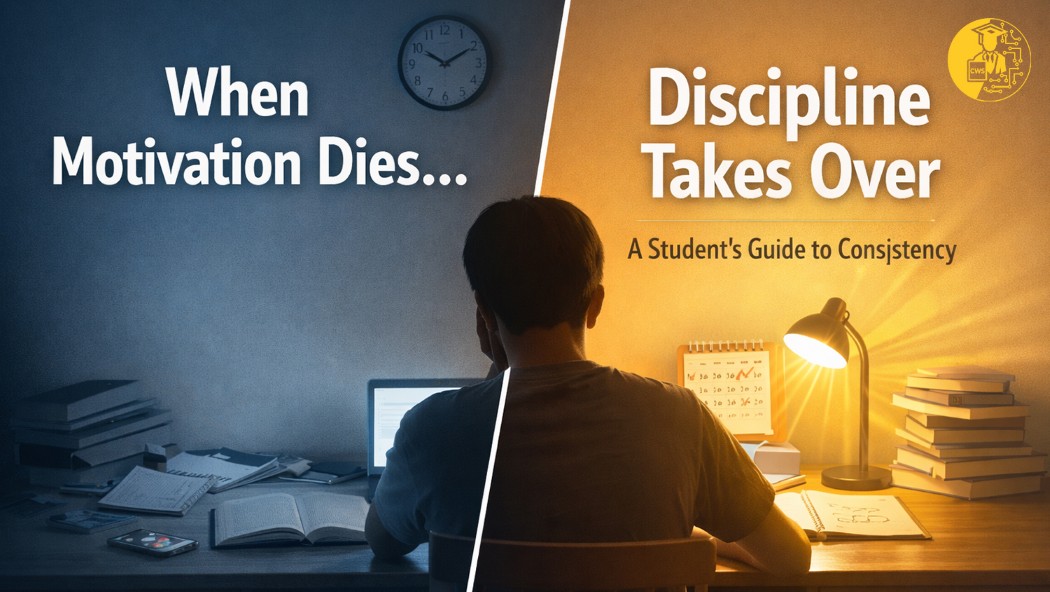
Teenagers face unique challenges between school pressure, social expectations, and the constant pull of social media, it’s easy to get distracted or lose focus. Staying disciplined can feel like an uphill battle, especially when motivation wanes. However, discipline is the key to unlocking long-term success and personal growth.
Learn how to stay disciplined when motivation dies for teenager. Discover powerful habits, mindset shifts, and practical tips to stay consistent even when motivation fades.
Motivation: Motivation feels great — that spark that pushes you to start a new habit, project, or goal. But it’s temporary. Motivation can vanish when life gets tough or boring. That’s why relying on motivation alone is dangerous.
Discipline: If we want long-term success—whether in studies, fitness, career, or personal goals—we need discipline, not motivation. Discipline is what carries us forward on the days when you don’t feel like doing anything, as a saying of my idol, Virat Kohli, - Discipline is superior to mere motivation; defining success as the result of consistent, daily hard work combined with extreme focus and sacrifice.
The key aspects for discipline being are:
| Aspect | Description |
|---|---|
| Consistency Over Intensity | Success is about showing up every day, not just when motivated. |
| Chase Betterment | Revolving around constant improvement from the previous day or previous time. |
| Embracing Pressure | Viewing high-pressure situations as the "Perfect Zone" rather than a threat. |
| Sacrifice for Excellence | Offer international curricula, often with multilingual instruction and global perspectives. |
Teenagers face unique challenges. Between school pressure, social expectations, and the constant pull of social media, it’s easy to get distracted or lose focus.
1. Lack of clear goals: If you don’t know why you’re doing something, it’s hard to stay consistent.
2. Instant gratification: Apps and games give you quick rewards, unlike real achievements that take time.
3. Comparison culture: Seeing others “ahead” online can make you feel like you’ll never catch up.
When motivation dies, it’s not a failure — it’s a signal that it’s time to build structure and habits that work even without emotional highs.
When motivation disappears, it’s time to switch from emotion to structure. Here are practical strategies to build discipline that lasts:
Treat your study time, workouts, or hobbies as unmissable appointments. Use a planner or digital calendar — and stick to it like a job. Instead of aiming for ambitious goals that are hard to maintain, set small, non-negotiable daily habits.
For example, instead of “Study for 5 hours,” try “Study for 30 minutes every day.” This builds consistency and momentum without overwhelming your teenager.
Ask yourself: Why did I start this goal? Whether it’s getting fit, improving grades, or building a skill, reconnect with your deeper purpose.
However, don’t rely solely on this emotional connection. When motivation fades, discipline takes over. Your “why” is the fuel, but discipline is the engine that keeps you moving forward.
Willpower is limited. Systems are powerful. If you depend on willpower, you’ll fail on tired days. If you build systems, discipline becomes automatic.
For example, create a dedicated study space free from distractions, set specific times for work and breaks, and use tools like timers or apps to keep you on track.
Mental toughness is about staying consistent despite feelings. Practice visualization — imagine your future self-succeeding because you didn’t give up.
Also, use positive self-talk. Replace “I can’t do this” with “I’m getting better every day.”
People aren’t born disciplined. They practice it.
Start small. Commit to one disciplined action daily, like reading for 10 minutes or doing a quick workout. Gradually increase the challenge as you build confidence.
Every time you:
You strengthen your discipline muscle. And like any muscle, it grows slowly—but once it’s strong, it carries you far.
Start with 5-minute actions. Once you begin, momentum builds naturally.
Adjust, don’t quit. Discipline grows from learning what works for you.
Yes! Discipline is doing what needs to be done regardless of feelings.
Use focus apps or set “no-phone zones” during study hours.
Because motivation depends on emotions. Build habits instead — they last longer.
Absolutely. Discipline shapes your future and builds self-respect.
A blog by: Kunal Sharma and Chanchal Gautam
 Computer Wale Sir