Explore the essential skills to kickstart your career in cybersecurity.
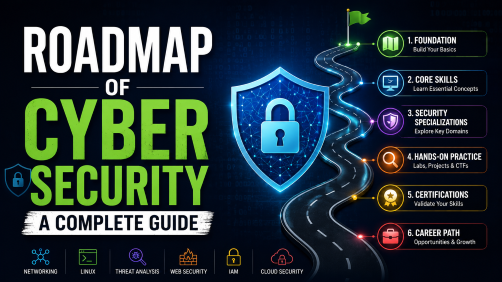
Discover the ultimate roadmap to learn cybersecurity! This beginner-friendly guide covers essential skills, certifications, tools, and resources to kickstart your cybersecurity journey. Start building your expertise today!
Cybersecurity is the practice of protecting systems, networks, and data from digital attacks. Think of it as a shield that keeps malicious hackers at bay while ensuring sensitive information stays safe.
In a world where everything from banking to healthcare relies on digital systems, cybersecurity is the backbone of digital trust. Without it, personal data, corporate secrets, and even national security could be at risk.
Before diving into cybersecurity, you need to know how computers work. Learn about operating systems, hardware, software, and basic troubleshooting.
Networking is the backbone of cybersecurity. Start with basics like IP addresses, DNS, and protocols like TCP/IP and HTTP. Tools like Cisco Packet Tracer can be helpful.
Cybersecurity isn’t one-size-fits-all. It includes network security, application security, cloud security, and more. Each specialization tackles specific threats.
From phishing scams to ransomware attacks, understanding common cyber threats is essential to prevent them.
Cybersecurity professionals must be comfortable with operating systems, especially Linux. Learn commands, file systems, and security configurations.
Programming isn’t just for developers. Languages like Python, JavaScript, and Bash scripting are invaluable for automating tasks and analyzing malware.
Cryptography protects information through encryption. Understanding concepts like SSL/TLS, hashing, and digital certificates is crucial.
Focus on securing networks by configuring firewalls, monitoring traffic, and preventing unauthorized access.
Learn how to secure software during its development life cycle by identifying and fixing vulnerabilities.
As businesses migrate to the cloud, understanding how to secure cloud environments is essential.
Get hands-on experience with tools like Wireshark, Nmap, and Nessus. They help identify vulnerabilities and analyze network traffic.
Tools like Metasploit and Burp Suite are commonly used in penetration testing to simulate attacks and identify weaknesses.
A home lab is a safe environment to test your skills. Use tools like VirtualBox or VMware to simulate networks and systems.
Virtual machines allow you to practice without risking your actual system. Test different operating systems and tools safely.
Explore famous cyberattacks to understand how they happened and how they were mitigated.
Learn how to respond to security breaches effectively by simulating incidents in your lab.
Pen testing involves simulating attacks to identify vulnerabilities. It’s a highly sought-after skill in the field.
Learn how to investigate and analyze digital evidence after a security breach.
Threat hunting is proactively searching for cyber threats that might evade detection systems.
Cybersecurity isn’t just technical—it requires out-of-the-box thinking to solve complex challenges.
Being able to explain technical issues to non-technical stakeholders is a key part of the job.
Create a portfolio that demonstrates your hands-on skills, like configuring firewalls or creating secure applications.
Share your knowledge with the community by writing about your experiences and solutions.
Subscribe to cybersecurity blogs, podcasts, and forums to stay ahead of emerging threats.
Join cybersecurity communities on platforms like Reddit, Discord, and LinkedIn to network and learn from others.
Cybersecurity offers roles like security analyst, ethical hacker, and CISO. Explore each to find your fit.
Success in cybersecurity requires continuous learning and adapting to new technologies and threats.
Not necessarily. Certifications and practical skills often outweigh degrees in this field.
It depends on your dedication. With consistent effort, you can gain a strong foundation in 6-12 months.
Python is a great starting point. Other useful languages include JavaScript, Bash, and C.
Yes, ethical hacking is legal when performed with permission as part of a security audit.
Experiment with different areas like network security or digital forensics to discover what interests you most.
 Computer Wale Sir